Agriculture Bureau,New Taipei City Government
 Agriculture Bureau,New Taipei City Government


Ecological Engineering methods
The term "Blue Belt" refers explicitly to water bodies, including rivers, streams, lakes, and coastlines. In world-renowned cities such as Paris and London, blue belts are not only visual landmarks in urban landscapes but also play a vital role in regulating the climate and offering recreational spaces for residents.
The Agriculture Bureau of New Taipei City Government promotes the concept of an “Ecological Blue Belt,” using ecological engineering to protect farmland and residents' lives and property along streambanks. This approach helps prevent erosion, collapses, and sediment-related disasters while incorporating landscape design principles to beautify vegetation and bring the public closer to nature.
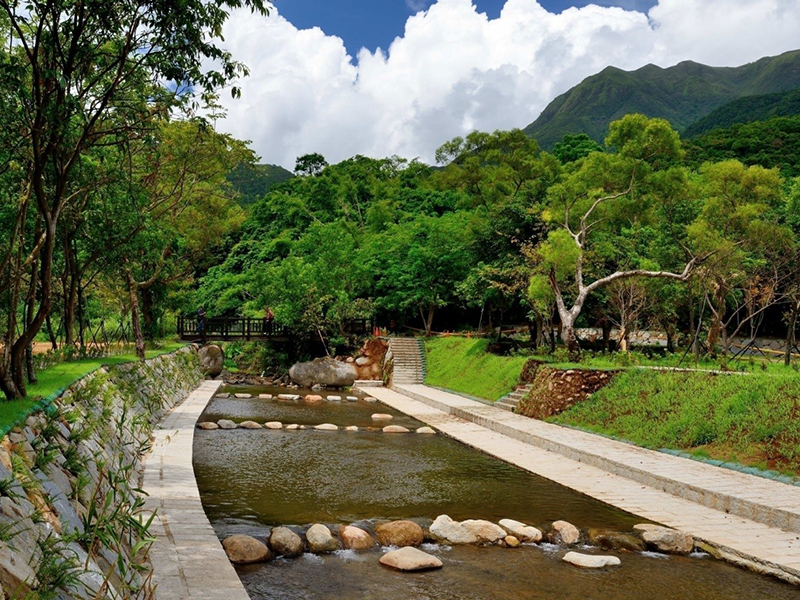
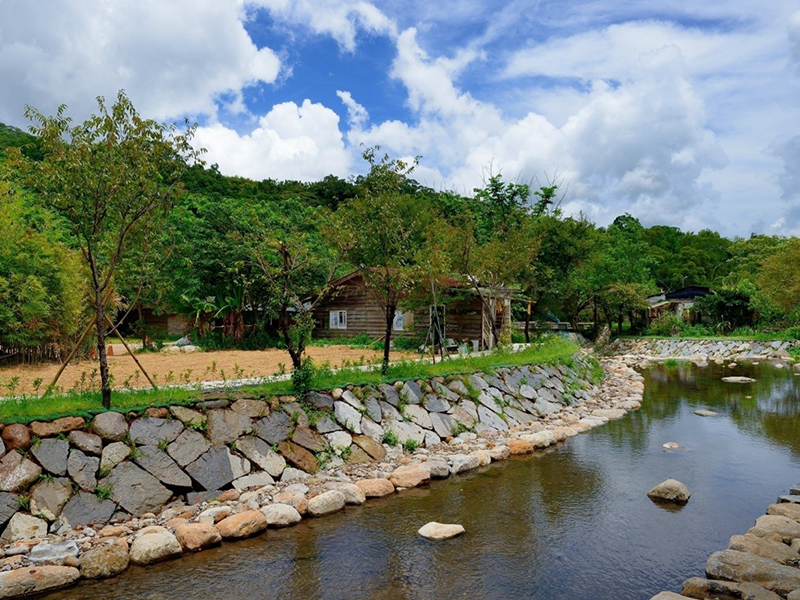
After the introduction of the ecological blue belt concept, the Qingshui Park in Jinshan District underwent environmental restoration and has since become a local hidden gem. The riverbank reinforcement project along the upstream Huangxi section in Chonghe Village, Jinshan, was entirely constructed using dry-laid stone, which creates a porous ecological environment and includes natural fish reefs to accelerate environmental recovery.
Ecological surveys conducted during construction recorded the presence of several nationally protected species such as the Crested Serpent Eagle, Crested Goshawk, and Collared Scops Owl, indicating a healthy ecosystem capable of supporting top-level predators.
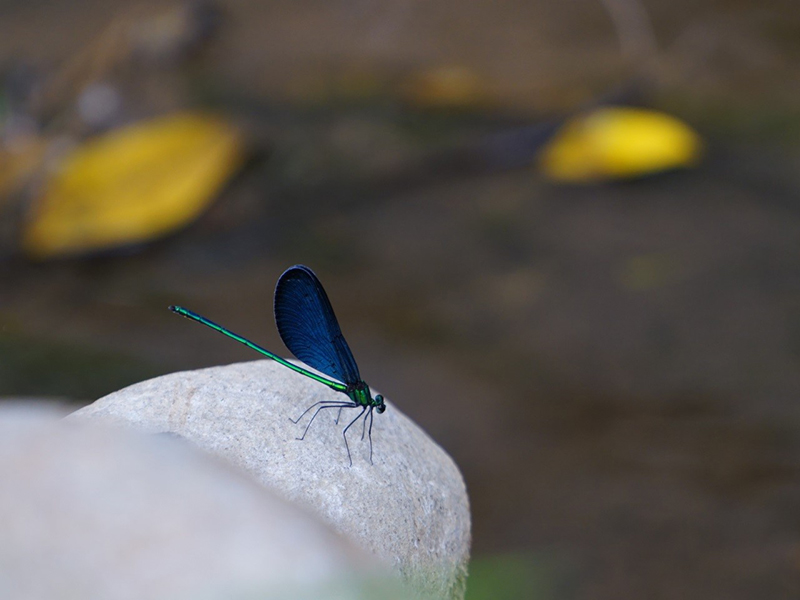
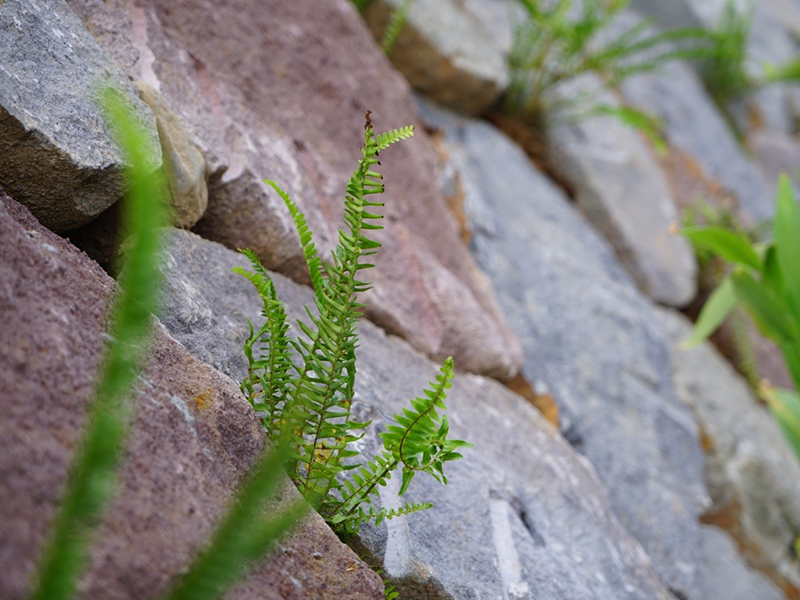
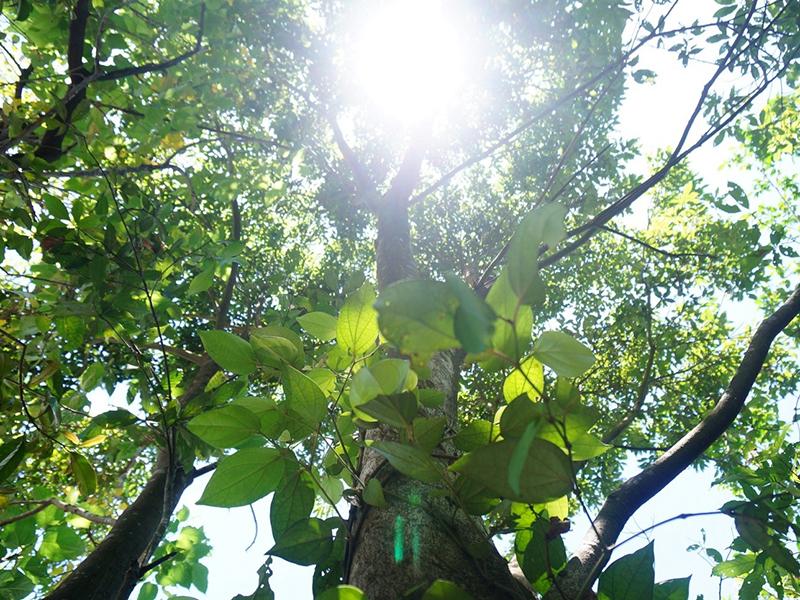

With landscape design incorporated throughout the park, existing vegetation was preserved and enhanced to beautify the area and offer a safe, nature-friendly recreational space for visitors. Qingshui Stream originates at the foot of the Datun and Zhuzishan mountain ranges in Yangmingshan National Park, flows through the park, and eventually merges with Huangxi Stream.
However, severe upstream sedimentation had damaged the intake weir, impacting the irrigation of 80 hectares of farmland downstream. In response, the Agriculture Bureau moved away from traditional concrete-fill methods and adopted the ecological blue belt model, building dry-laid stone structures to create a porous habitat. Natural fish reefs were installed to support aquatic life, and ongoing environmental surveys confirmed the area's biodiversity. The entire project area preserved original plants and added new vegetation, greening the landscape and providing a safe and immersive space for people to experience nature.
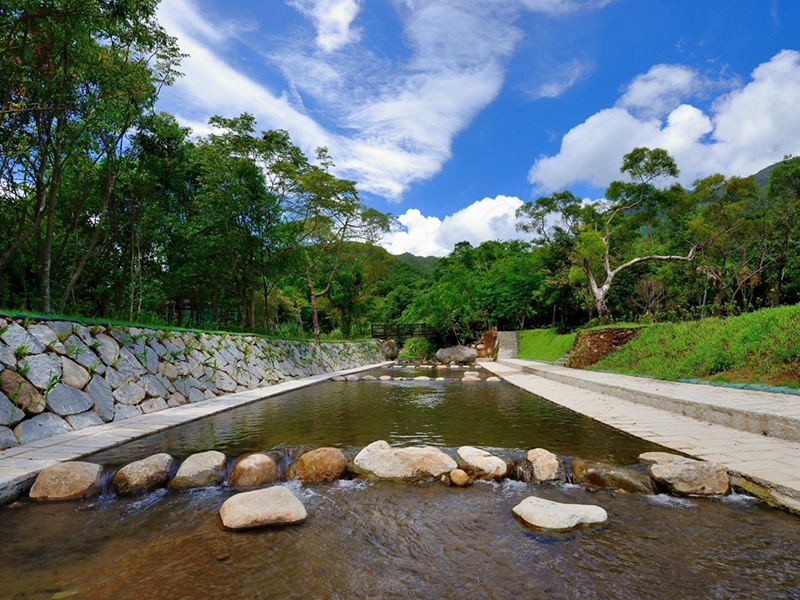
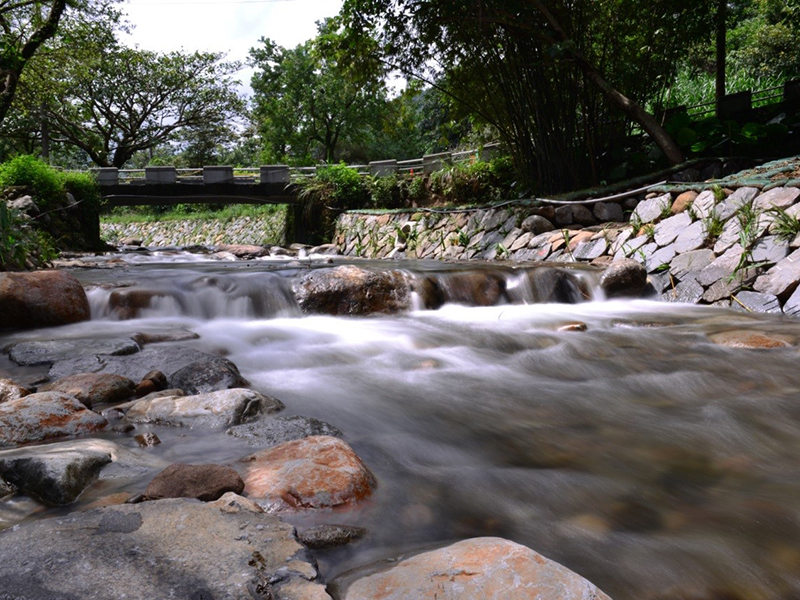
In terms of structural safety and flood protection, the dry-laid stone embankments remained fully intact even after significant water flow events, apart from minor sediment accumulation. This result surprised residents who had originally requested traditional cement embankments, and they expressed appreciation for the project's balance between ecological preservation and engineering durability.
The restoration of Qingshui Park has renewed farmers’ willingness to cultivate the land, and the project has received several accolades, including: The National Construction Excellence Award (First Prize), The New Taipei City Government Award for Outstanding Public Works, and The Ministry of Agriculture’s Award for Excellent Agricultural Infrastructure
When visiting Jinshan’s Qingshui Park to enjoy nature, please note that the area is part of a stream closure and fish conservation zone (from the Yangmingshan National Park boundary down to the confluence with Huangxi Stream). Fishing, capturing, or releasing aquatic animals such as fish fry is strictly prohibited. Violators may be fined between NT$30,000 and NT$150,000 following the Fisheries Act.
In the future, the New Taipei City Government will continue to assess on-site conditions and evaluate the feasibility of building additional ecological blue belts. By understanding local species and environmental data, suitable engineering methods will be planned in consultation with residents through ongoing dialogue. Subsequent activities will include guided ecological tours and outdoor soil and water conservation education programs, helping participants connect with the surrounding environment. Local communities will also be encouraged to take part in environmental education and take ownership of ecological maintenance, supporting long-term sustainable management.