Agriculture Bureau,New Taipei City Government
 Agriculture Bureau,New Taipei City Government


Lychee Stink Bug (Tessaratoma papillosa)
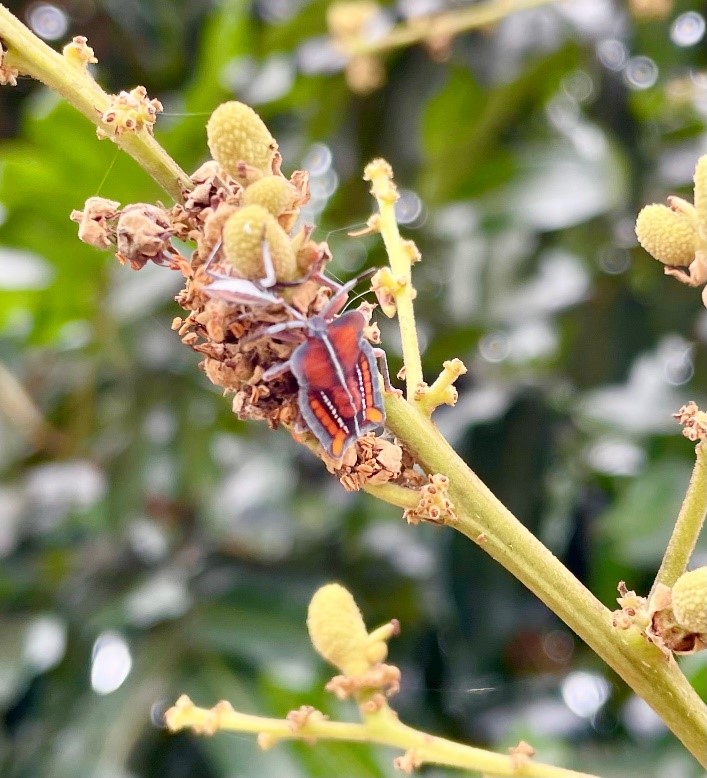
The lychee stink bug (Tessaratoma papillosa) is mainly distributed in China, South Asia, and Southeast Asian countries. It invaded Taiwan in 2009 and primarily infests soapberry family plants such as longan, lychee, and the Formosan golden-rain tree. The peak egg-laying season is from March to May, and the nymph stage lasts from March to October. Their feeding can cause plant growth to slow down, floral panicles to wither, or flowers and fruits to drop. However, they do not tend to invade homes and do not bite humans or animals, so the public should not be overly alarmed. If spotted, avoid disturbing them to prevent being sprayed with their foul-smelling defensive liquid.
To control or remove lychee stink bugs, the following methods can be used:
I. Physical Control
1. If you see eggs, remove them immediately. When encountering nymphs or adults, be cautious of the stinky liquid. Take proper protective measures and use tools to knock them down, then seal them in a plastic bag or PET bottle before disposal.
2. Properly prune low side branches or water sprouts. Do not leave trimmed branches or fallen leaves at the site to prevent reinfestation.
II. Chemical Control
1. For small infestations, diluted soapy water can be sprayed directly on the insects.
2. For larger infestations, it is recommended to contact an Environmental Protection Bureau-certified pest control company to apply legally registered environmental pesticides.
III. Biological Control
1. You may purchase parasitic wasp egg cards from Good Farms Co., Ltd. (Phone: 0937-063-226), a licensed biocontrol company authorized by agricultural research stations. Release the egg cards as instructed by the supplier.