Agriculture Bureau,New Taipei City Government
 Agriculture Bureau,New Taipei City Government


Soil and Water Conservation Education Seminars
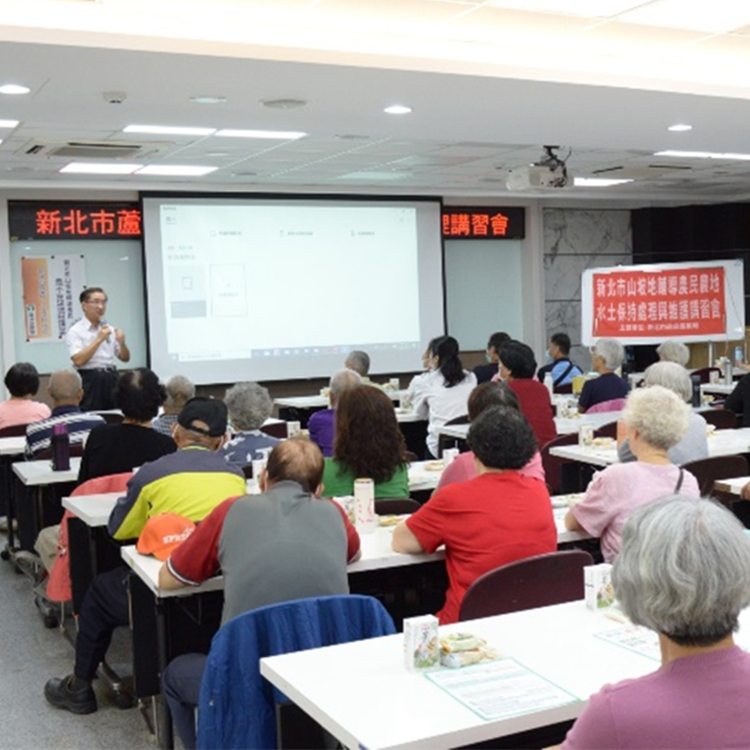
Since the promulgation of the Soil and Water Conservation Act, relevant regulations have been established to govern various land development activities. These regulations require individuals to submit soil and water conservation plans for approval before conducting excavation or land preparation on sloped terrain, aiming to prevent potential disasters in advance. To assist the public in understanding the application process and the required documents and drawings, the Agriculture Bureau has assembled a team of professional technicians to form the New Taipei City Soil and Water Conservation Service Team. The team is available at scheduled times to answer the public's questions regarding soil and water conservation applications.
The New Taipei City Soil and Water Conservation Service Team handles over one hundred cases annually, with a growing number of consultations each year. Given the recent effects of global climate change, including an increase in typhoons, and considering that New Taipei City covers a vast area—of which 88% (approximately 180,000 hectares) is sloped land—the service is essential for many residents. Citizens in need of assistance may visit the Agriculture Bureau's service counter at New Taipei City Hall on Mondays and Thursdays to consult with soil and water conservation technicians. Those unable to visit in person can go to the Agriculture Bureau’s website under the “Find Resources” section, and access “Application Services” or “Online Application/Reservation/Inquiry” to submit an online reservation form and request on-site consultation from the Soil and Water Conservation Service Team.
To further enhance public awareness, the Agriculture Bureau also organizes a Soil and Water Conservation Month with a series of activities. These include school outreach programs, where interactive teaching tools and professional explanations help students gain a better understanding of Taiwan’s natural environment, and foster accurate public knowledge about soil and water conservation and the protection of our homeland.