Agriculture Bureau,New Taipei City Government
 Agriculture Bureau,New Taipei City Government


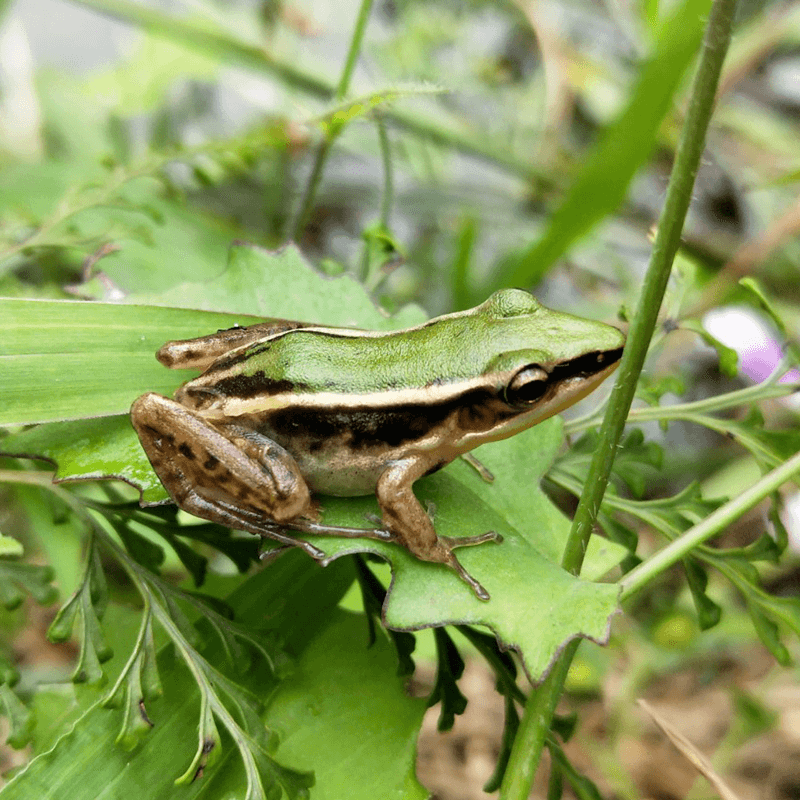
Taipei Grass Frog (Hylarana taipehensis)
Background
The Taipei grass frog, scientific name Hylarana taipehensis, was once a common species in Taiwan’s farmlands. However, due to changes in agricultural practices, widespread use of pesticides and fertilizers, and the conversion of farmland into residential and industrial zones, its habitats and population have drastically declined. Today, it is classified as a rare and valuable protected wildlife species.
In New Taipei City, the Taipei grass frog has only been found in small numbers in Sanzhi and Shimen Districts, with sightings in other areas becoming extremely rare.
To conserve and restore the Taipei Grass Frog, the Agriculture Bureau of New Taipei City has actively collaborated with the Taipei Zoo, with each party taking on different responsibilities: improving the rural environment, creating habitats, and conducting research on breeding technology for the Taipei Grass Frog. The goal is to artificially breed the frogs and then reintroduce them into restored wild habitats to save this rare and precious Taipei Grass Frog.
Collaboration Model
The New Taipei City Agriculture Bureau is promoting habitat reconstruction, specifically, improving rural and community environments to rebuild suitable habitats for the Taipei grass frog. Taipei Zoo focuses on ex-situ conservation and breeding to stabilize population numbers, after which the frogs are reintroduced into restored habitats. This method of ex-situ conservation, captive breeding, and reintroduction represents the latest approach used by international conservation experts to protect endangered species. Through collaborative projects involving habitat surveys, habitat restoration, collection of genetic material, and population rehabilitation, the aim is to increase the Taipei grass frog population and achieve successful restoration.
Taipei Grass Frog Habitat Restoration Project
Using GIS to build layered analyses of the frog's distribution and population changes, the project also employs ecological distribution modeling to evaluate potential habitats for the Taipei grass frog. It focuses on rural and community environment improvement, habitat creation, and the training of citizen scientists to assist in habitat surveys. Once expert assessments confirm that both the reared frogs and environmental conditions are suitable, the frogs are reintroduced into the restored wild habitats. The ultimate goal is to expand and stabilize the Taipei grass frog population.